

Saxon Air
Norwich
18kWp
Total installed capacity
44

Solar panels installed
1
Inverter installed
“The installation of our aircraft solar charging canopy gets us closer to energy self-sufficiency targets. It also showcases electric aviation to a wider audience as we believe it’s the first of its kind at a UK regional airport. We now have a standalone location for energy self-sufficient electric aircraft operations, and now very much part of normal airport operations. Thanks to RenEnergy and Norwich Airport for helping to make this happen.”
Alex Durand, Chief Executive Officer, Saxon Air
The ambition
Established in 2007 with a vision of providing flexible, convenient, and cost-effective business flights, Saxon Air initially had just five staff, one helicopter, and one jet. Acquired by Klyne Aviation Group in 2009, the company expanded its fleet and staff expertise. Recognised as the preferred handling agent at Norwich Airport in 2010, Saxon Air developed the multi-million-pound Business Aviation Centre. Over the past decade, the company has grown and diversified its services, now boasting a dedicated team of over 50 people.
Saxon Air provides integrated aviation services, flying clients worldwide with their versatile fleet of helicopters and business jets. Their core services include flight support operations and aircraft management at Norwich Airport, optimising asset viability and relieving ownership administrative burdens. With in-depth aviation knowledge, Saxon Air excels in problem-solving and value enhancement across various areas.
Saxon Air also takes proactive steps towards sustainability, making it a strategic priority since 2019. Committed to Net Zero by 2050, they offer carbon offsetting and impact-reducing programs for charter clients. Beyond ‘can-do’ sustainability, Saxon Air’s focus extends to fostering cultural change and open conversation. Saxon Air’s new charging port, which integrates a solar energy array specifically tailored for electric aircraft, adds to the clean energy capabilities they began with RenEnergy in their recent installation of a large-scale grid-connected solar PV system.


Canopy adaptability and origins 2021
The solution

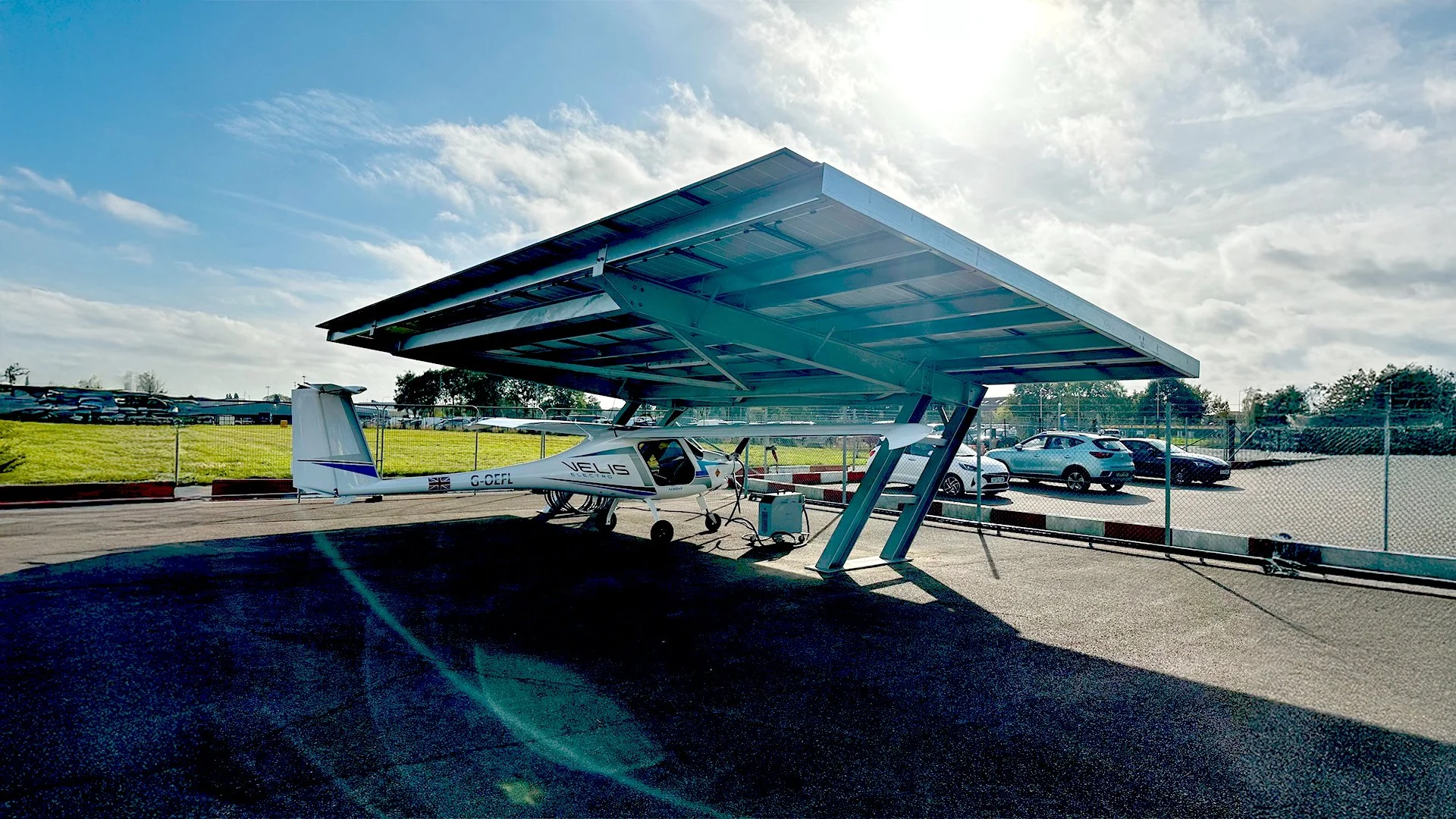
This setup now generates sustainable power for multiple operational needs, including the cutting-edge electric charging port. Their fleet features the Pipistrel Velis Electro, an electric aircraft used for sustainable flight training, supporting a forward-looking approach to environmentally responsible aviation learning.
The system was developed to deliver dedicated, renewable-powered infrastructure for the growing electric and hybrid aviation sectors. Traditional aviation energy models rely heavily on fossil fuels (AVGAS, Jet A1) or grid-supplied power with variable carbon intensity. RenEnergy and Saxon Air have reimagined this model, creating a fully integrated clean energy ecosystem where solar power generation, energy storage and aircraft charging co-exist seamlessly.
This project supports the UK Government’s Jet Zero Strategy, offering a tangible blueprint for net-zero aviation. The addition of the SkyCharge BESS extends system capability -enabling power balancing, resilience during peak demand and uninterrupted charging for electric aircraft, emergency air services and ground support equipment.

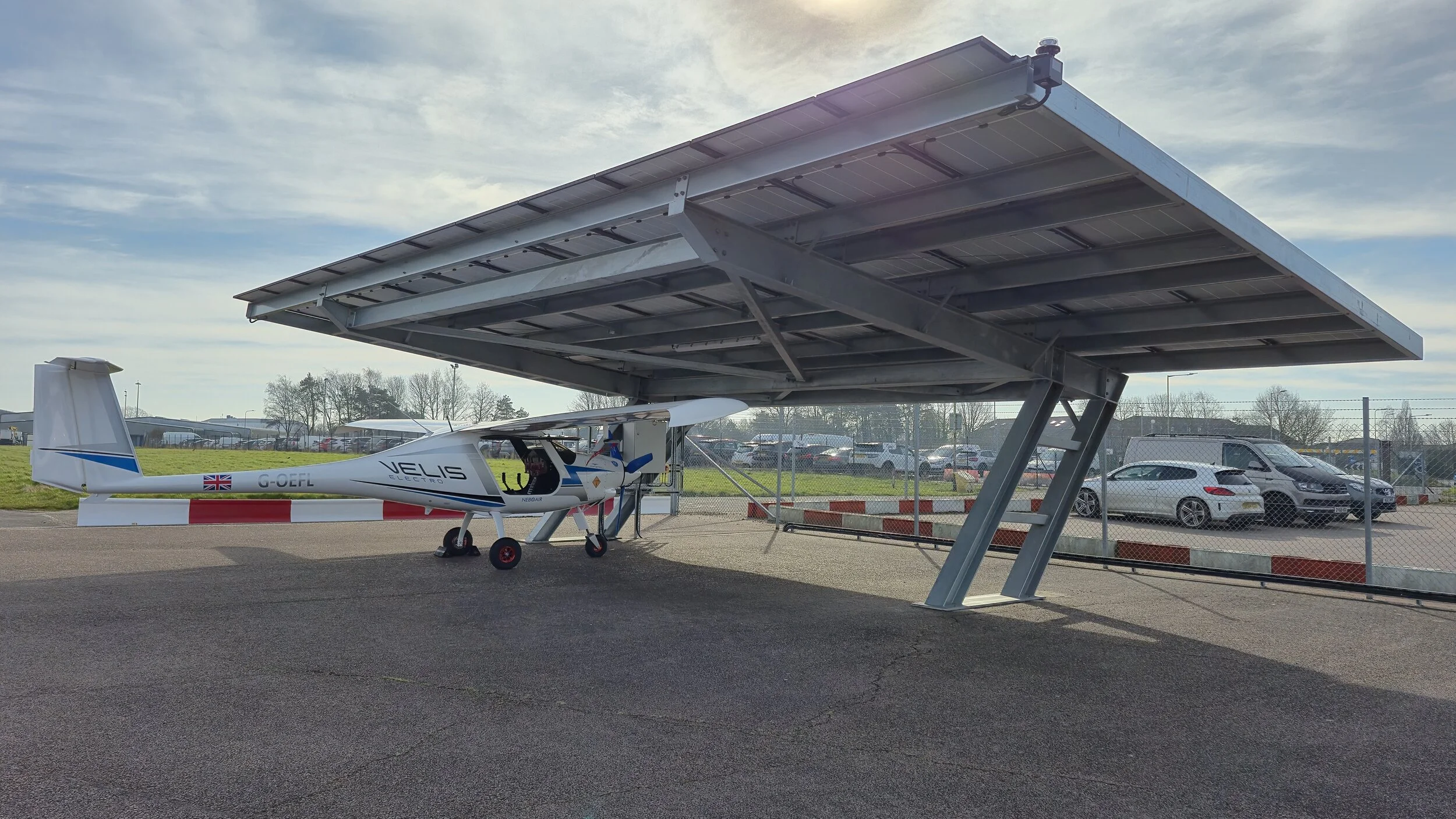
The combination of: on-site renewable generation (18 kWp solar array), advanced energy storage (SkyCharge BESS), smart grid integration and bi-directional (V2G) functionality positions the system as a pioneering example of how renewable energy can directly support aviation decarbonisation.
The installation already generates 18,146 kWh of renewable energy annually, cutting approximately 3,445 kg of CO₂ emissions each year. By combining this with SkyCharge’s 1.6 MW of flexible charger capacity and battery optimisation, the system maximises renewable self-consumption and minimises reliance on the grid.
When replicated across the UK’s 100+ regional and general aviation airports, such systems could reduce aviation-related ground emissions by thousands of tonnes of CO₂ annually, accelerating the decarbonisation of an industry that has historically had limited sustainable options.
Beyond carbon savings, this infrastructure reduces noise pollution, promotes air quality improvements, and enables near-silent, zero-emission electric flight which is a key milestones in achieving the UK’s 2050 Jet Zero ambitions.


The model is replicable across the aviation and transport sectors: Airside: Electric aircraft and ground support equipment charging. - Roadside: EV charging for staff, tenants, and public use (10 chargers). - Energy Storage: Load balancing and site resilience.
The modular steel-frame canopy and helical-anchor installation make it suitable for retrofit or new builds, with minimal operational disruption.
RenEnergy provides ongoing monitoring, maintenance, and performance optimisation. Saxon Air staff receive training in safe operation and monitoring of both the solar canopy and SkyCharge system, ensuring full operational autonomy and safety compliance.
The partnership between Saxon Air and RenEnergy reflects a shared commitment to environmental sustainability and innovation within aviation. This installation exemplifies how forward-thinking, locally-rooted businesses can lead the way in developing regional infrastructure to meet global challenges.

Saxon Air plane development - commercial deployment 2024
“We are thrilled to support Saxon Air in taking sustainable aviation to new heights. Working alongside a forward-thinking partner like Saxon Air, we’ve developed an infrastructure that will enable them to achieve their environmental goals, while also enhancing operational efficiency. This project is a fantastic example of how innovative renewable technology can be adapted to meet the needs of modern aviation. We look forward to seeing the benefits this will bring to the sector.”
Damian Baker, Managing Director, RenEnergy
The benefits

Optimised solar panel placement for maximum energy yield
Improved self-consumption of solar-generated electricity for sustainability
Reduced dependence on conventional power grids for increased control
Long-term financial stability by minimising exposure to fluctuating utility costs
Massive sustainability strides and innovation for green aviation
CO2
Annual saving of 3,445 kgCO₂/year. That’s equivalent to removing just under one gasoline-powered car from the road for an entire year
Saxon Air
Norwich
Note that all estimated performance figures are calculated using industry-standard systems and norms, assume ideal operating conditions, and were estimated as at the time of the installation. EPA Greenhouse Gas Equivalencies Calculator.